


Building the Ports of the Future
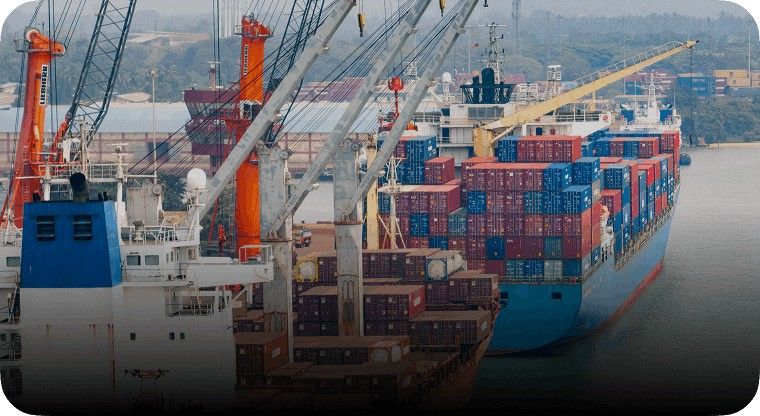
JSW Infrastructure’s Vision for a Next-Generation Logistics Nation
From its earliest days as a dedicated logistics arm of the JSW Group, JSW Infrastructure Limited (JWIL) has grown into one of India’s most consequential port and logistics companies.
Today, as India’s second-largest private port operator, the Company stands at the threshold of its most ambitious phase yet.
The vision is clear: to grow cargo handling capacity from its current 170 MTPA to 400 MTPA by FY30. The Company has continued to expand its capability of delivering end-to-end logistics solutions across the full length of India’s supply chains.
A Growth Plan Grounded in Reality
JSW Infrastructure’s expansion plan is underpinned by a committed capital expenditure of approximately ₹30,000 crore for the period FY25 to FY30. More recently, the Company announced a further ₹16,500 crore capital expenditure for FY27 and FY28, reinforcing the pace at which this expansion is being executed.
The expansion programme rests on two complementary levers:
-
Brownfield expansion at established ports of Jaigarh, Dharamtar and Goa, where proven assets are being scaled to absorb the cargo volumes of the next decade
-
Greenfield development of entirely new ports at Jatadhar, Keni and Murbe. Designed from the outset around the berth configurations, fully mechanised cargo handling systems and operational architecture that define future-ready ports and terminals
From Port Operations to Integrated Logistics
Beyond expansion, the more defining shift in the Company’s strategy is its evolution towards integrated logistics. Realising the vision to build a pan-India multimodal network; one that connects ports, inland terminals, rail-road evacuation corridors and value-added services into a single, cohesive offering. Enabling customers to move cargo seamlessly from origin to destination without the friction of managing multiple providers.
The acquisition of Navkar Corporation is central to this transition. Navkar’s network of container freight stations and inland logistics infrastructure extends its reach well beyond the berth and into the broader supply chain. It will strengthen the Company’s ability to offer genuine end-to-end supply chain solutions to manufacturers, traders and exporters. A slurry pipeline project further bolsters this offering, adding efficient bulk material movement to its portfolio.
Strengthening the Container Segment
Another dimension of the Company’s growth strategy is its targeted expansion into containerised cargo. A segment that reflects India’s growing role in global merchandise trade. On the west coast, the New Mangalore Container Terminal is being expanded from its current capacity to 0.35 million TEUs.
On the east coast, the Company signed a concession agreement with the Syama Prasad Mookerjee Port in Kolkata for modernisation.
Together, these developments bring total container handling capacity close to 1 million TEUs, establishing JSWIL as an emerging player in India’s container port sector.
A Growing Global Maritime Presence
JSWIL already operates internationally through its strategically located Fujairah terminal and Dibba terminal in the UAE. Terminals that provide both revenue diversification and operational expertise in global cargo handling.
In November 2025, the Company took a step further, entering into an agreement with state-owned Minerals Development Oman. A project capital expenditure of $419 million with a vision to develop and operate a 27 MTPA port. This collaboration is a strategic milestone in the Company’s journey towards 400 MTPA.
Sustainable Growth as a Core Commitment
The long-term strategy includes the commitment to achieving net GHG neutrality by 2050, embedding carbon reduction as structural priorities. Across its facilities, the focus on renewable energy adoption, environmental stewardship and sustainable port operations reflects a conviction that responsible growth and commercial ambition are in fact mutually reinforcing.
This commitment to ESG governance and green logistics runs through the entire function of how JSWIL plans, invests and operates. This is embedded from the design of new greenfield ports to the day-to-day management of existing terminals.
Poised for Long-term Impact
From a single port concession in Goa to a national and international network of ports and terminals, the journey of JSWIL’s expansion has always been one of purposeful, disciplined growth. The Company holds its course despite ongoing geopolitical tensions, remaining on track to meet its FY26 EBITDA target, backed by strong group cargo and logistics growth.
The next chapter of scaling to 400 MTPA, building a pan-India integrated logistics network, expanding its global maritime presence and embedding sustainability represents the Company’s most consequential phase of evolution yet.
For the industries that depend on efficient maritime logistics, and for a nation whose growth demands high-grade infrastructure, JSW Infrastructure is building the ports that the future requires.


