


Ports That Power the Industry
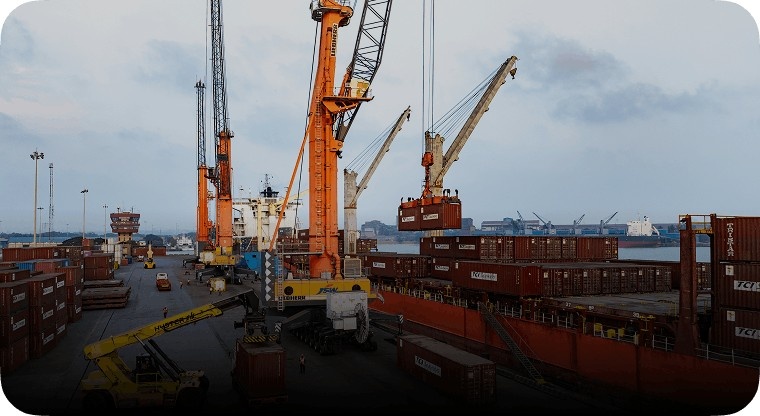
Built to Move a Nation: The Role of Port-Led Growth in India’s Industry
Behind every tonne of steel, every unit of power generated, and every shipment exported lies a critical but often unseen link—the port.
As India’s manufacturing expands, energy demand rises, and exports grow, efficient port infrastructure remains central to enabling this momentum. Berths, terminals, cargo handling systems and logistics networks together support the movement of goods at scale.
Where Industry Meets the Sea
Take coal, for instance. From mines to power plants, its journey depends on how efficiently ports handle unloading, storage and evacuation. Delays at any stage, berthing, yard congestion or conveyor systems, can disrupt supply chains and increase costs.
A similar dependency exists in the steel sector. With India among the world’s largest steel producers, ports serve as key gateways for iron ore exports and coking coal imports. The turnaround time of large vessels impacts not just shipping efficiency, but also downstream industries such as automotive and construction. Port performance, therefore, directly influences industrial productivity.
A System, Not Simply a Service
Modern ports have evolved from transit points into integrated logistics hubs. Today’s ports are designed to handle, store and dispatch cargo efficiently, with strong rail and road connectivity to industrial centres. This integration reduces bottlenecks and improves supply chain reliability.
For India, this shift is significant. As the country positions itself as a global manufacturing hub, logistics efficiency becomes a competitive advantage. Ports that reduce turnaround time and optimise capacity help lower costs and improve export competitiveness.
The Energy Equation
Ports also play a key role in energy security. Despite progress in renewables, India continues to depend on imports of coal, LNG and liquid fuels. Specialised terminals handle these commodities, and their capacity and efficiency influence energy availability and cost.
Investing in resilient port infrastructure is therefore both a commercial and strategic priority. It supports industrial growth while ensuring stable energy supply.
Connecting India to Global Markets
Exports rely heavily on port efficiency. Goods produced across sectors, textiles, pharmaceuticals, auto components, move through container terminals before reaching global markets. The performance of these terminals affects delivery timelines and costs.
Efficient, modern ports make exports more predictable and cost-effective. As India expands its global trade footprint, this reliability strengthens its position in international markets.
JSW Infrastructure: Built for Purpose
JSW Infrastructure Limited reflects the close link between ports and industry. Established to serve the logistics needs of the JSW Group, the Company has grown into India’s second-largest private port operator, with facilities across both coasts.
Its international presence includes terminals in Fujairah and Dibba in the UAE, extending its logistics network beyond India. The Company’s ports are fully mechanised, with deep-water capabilities and increasing digital integration to improve efficiency.
Expansion through brownfield and greenfield projects aligns with expected growth in trade and industrial demand. Alongside capacity growth, the Company is focused on sustainability, including renewable energy use and green logistics initiatives, embedding environmental considerations into operations.
Infrastructure as a National Multiplier
Port infrastructure has a multiplier effect across industries. Faster turnaround, better storage and efficient connectivity reduce costs and improve supply chain reliability. This supports sectors ranging from energy and metals to manufacturing and exports.
India’s coastline is a strategic asset, connecting major industrial regions to global markets. Realising its full potential requires integrated, efficient and scalable logistics systems.
Efficient ports enable industry growth. In turn, industrial growth drives economic progress. The relationship remains fundamental to India’s development and its ambitions in global trade.


